The “Bad Hair Day” of Wiring
In this post, I want to share a simple, slightly “janky,” but surprisingly effective tip for crimping spade terminals, which are common in DIY projects.
If you do any kind of electronics work, you know the struggle. You strip a flexible cable (especially those with hundreds of hair-thin strands), put it into a spade terminal, and crimp it.
And what happens? One or two little strands escape sideways. It looks like a stubborn cowlick that just won’t stay down.
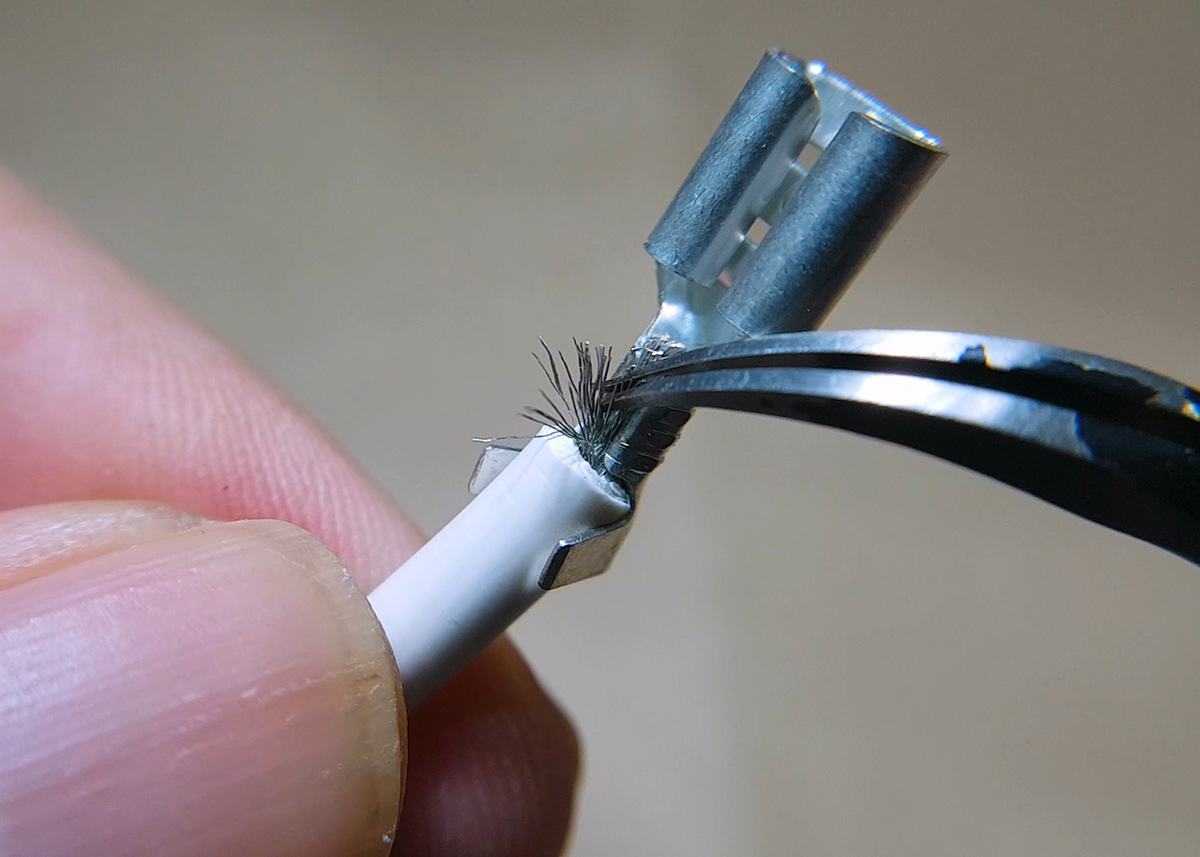
It’s not just ugly; it’s dangerous. Those stray wires can easily touch something they shouldn’t and cause a short circuit.
The Secret Weapon: A Ferrule
Sure, you could fix this by tinning the wire ends with solder. That works, too. But personally, I prefer using a Ferrule.
Usually, we use Ferrules for screw terminals. But today, we are going to use them as a key component (a custom sleeve) for our spade terminals.
Step-by-Step: The “Ferrule Sleeve” Method
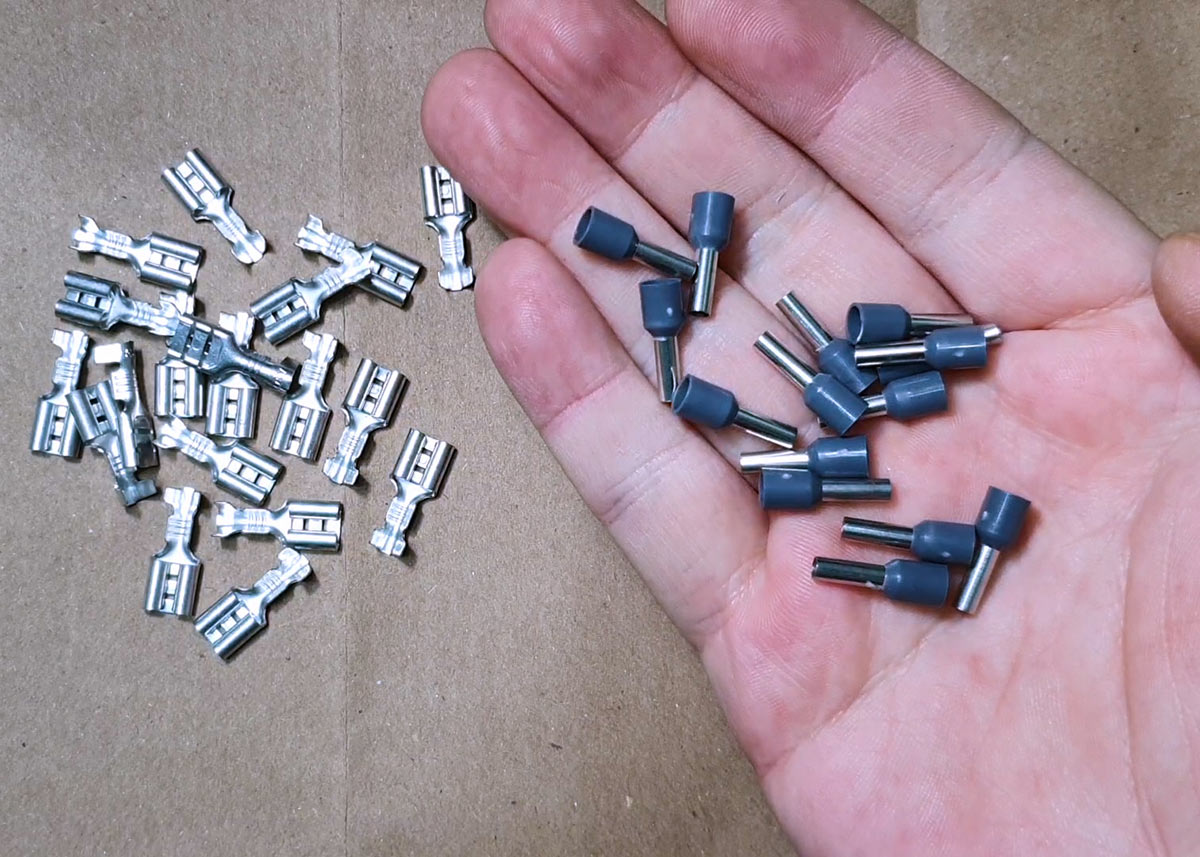
1. Strip the Ferrule: This is the most important part. Take a ferrule that fits your wire gauge. Since we don’t need the insulation, remove the plastic collar. We only need the metal tube.
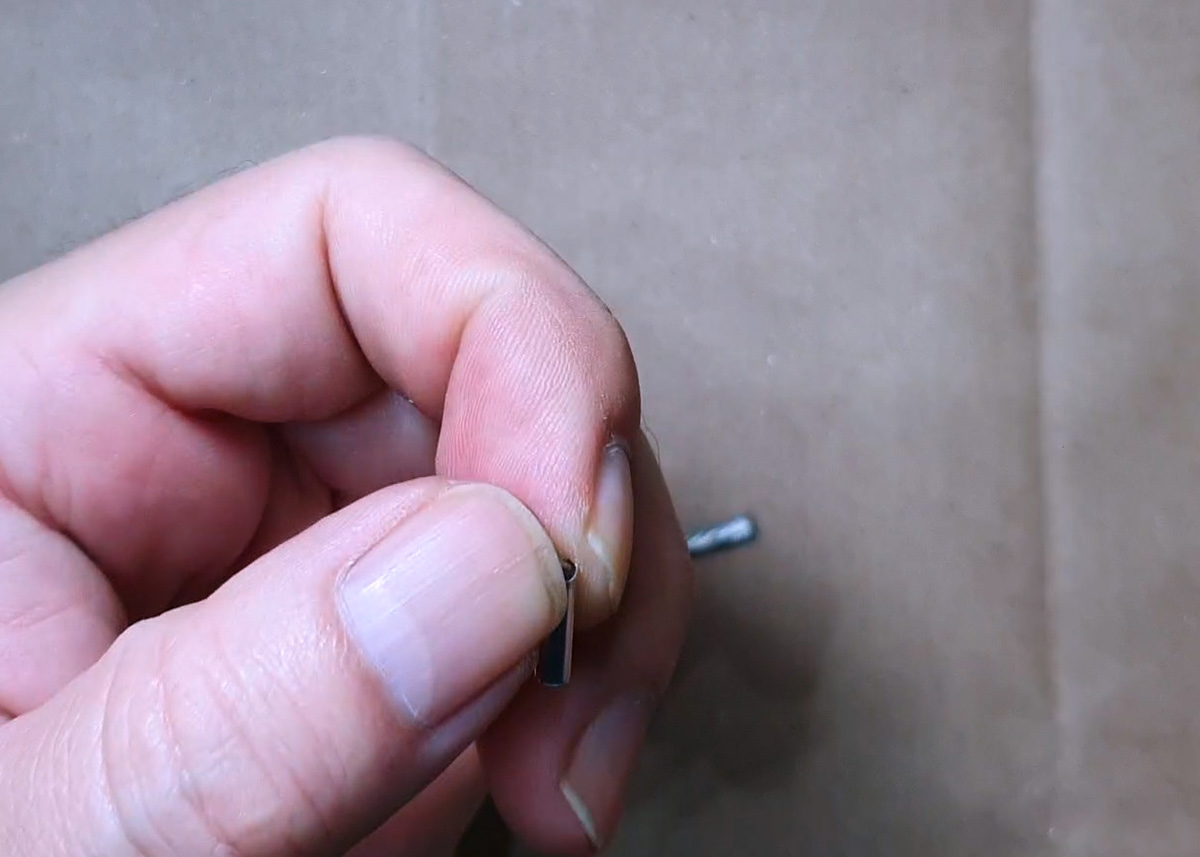
2. Insert the Wire: Insert the wire as is. No need to twist the strands further with your fingers, as that can make the bundle too thick. Just strip the insulation and carefully slide the metal tube over the natural strand bundle. This ensures that 100% of the strands are captured inside the tube. No escapees!
Side Note: Successfully sliding this in without catching a strand is oddly satisfying.
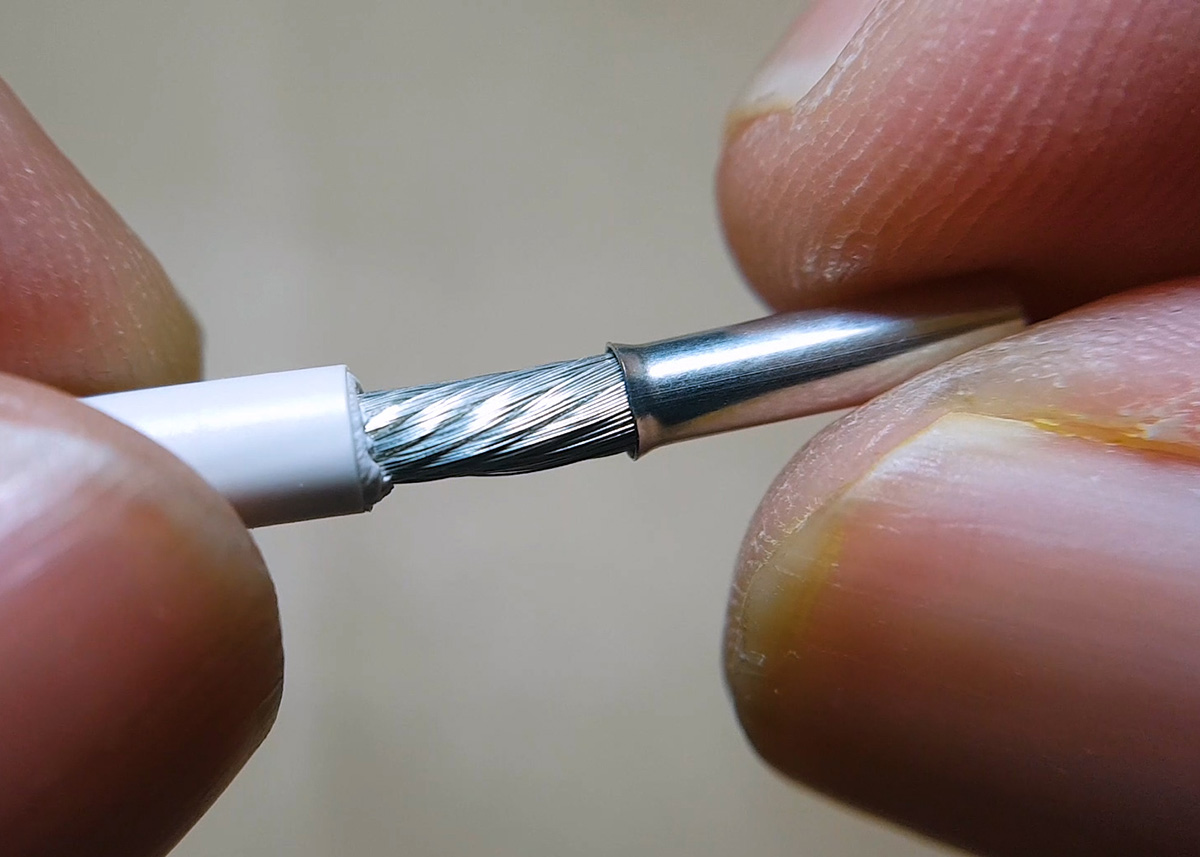
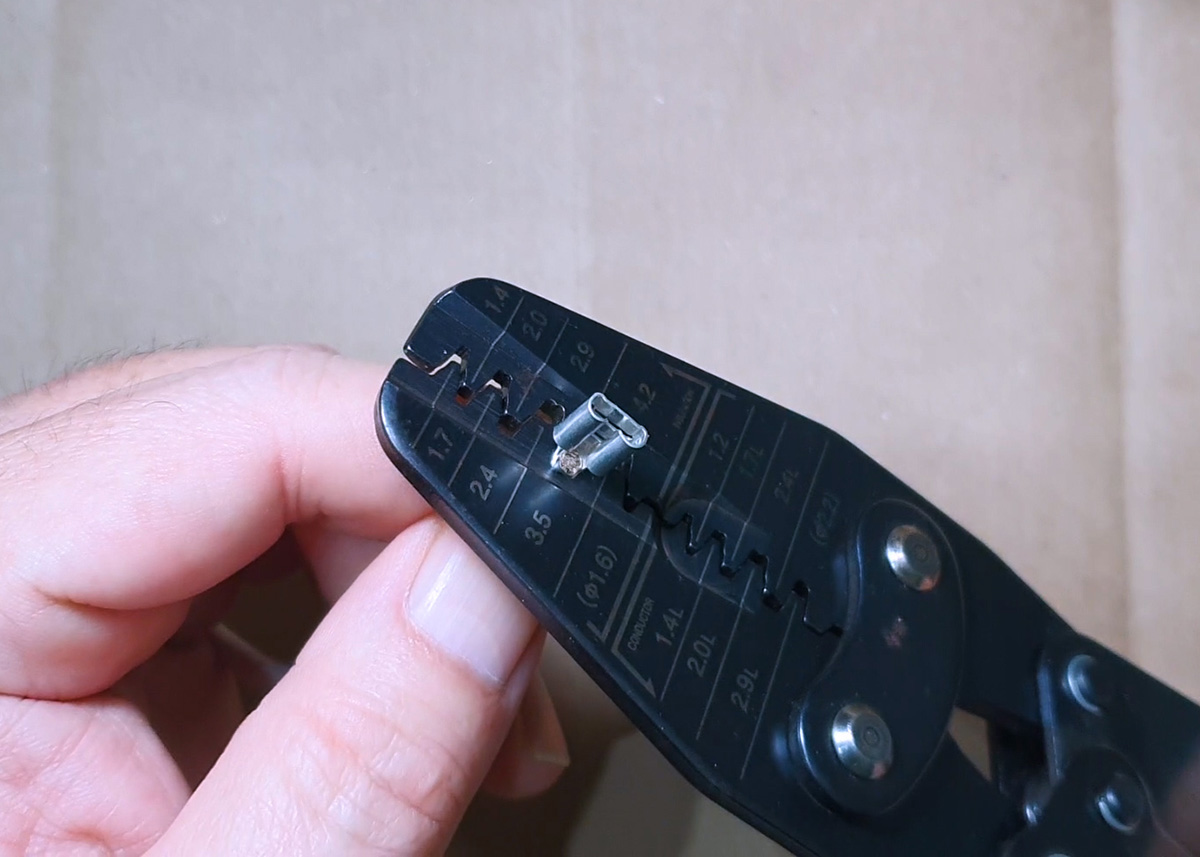
3. Trim and Crimp: If the wire or ferrule is too long for your spade terminal, trim it down. Then, insert the whole assembly (Wire + Ferrule) into the spade terminal and crimp it as you normally would.
The Result: Clean and Solid
Look at the difference. Even though I intentionally used a wire that was technically too thick for the terminal (just to demonstrate the difficulty), the result is incredibly clean.
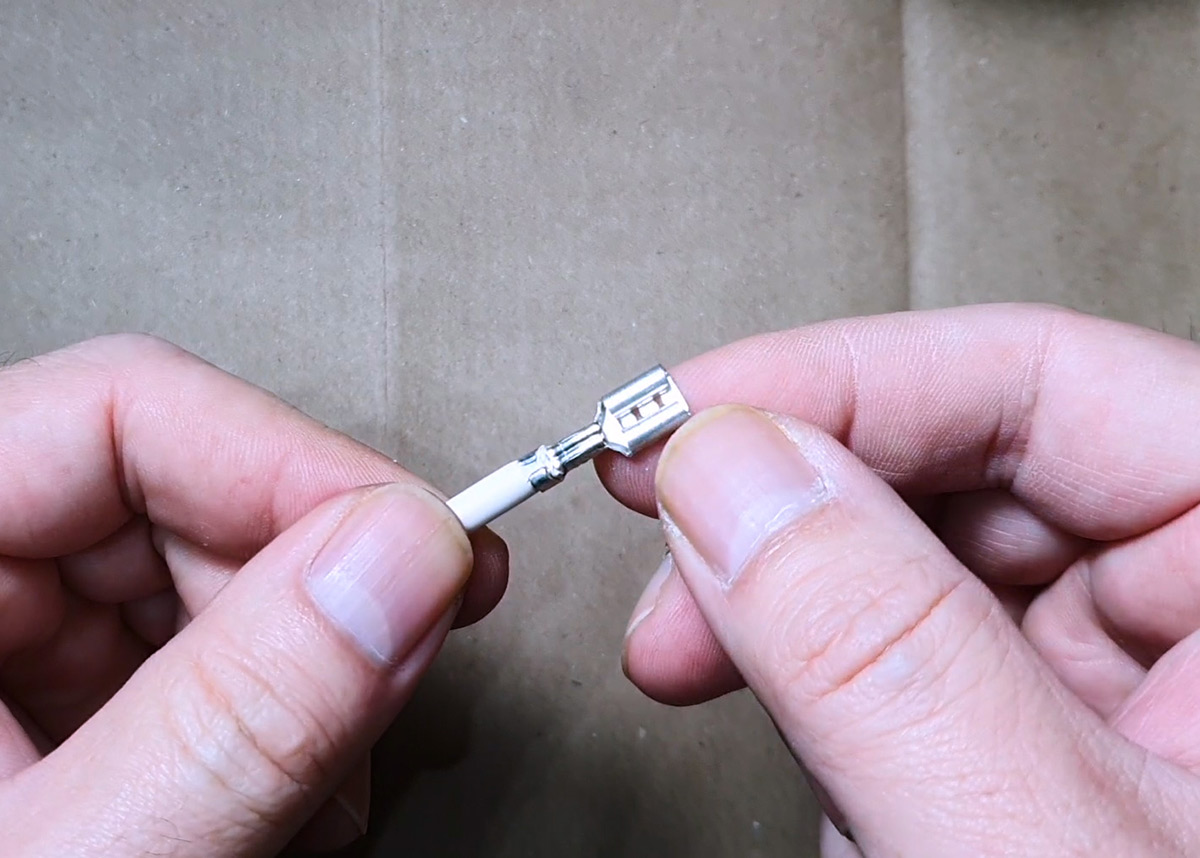
The ferrule acts as a container, holding all those fine strands together under the crushing force of the crimper.
A Quick Comparison
Here is the “Standard Method” vs. “My Ferrule Trick.”
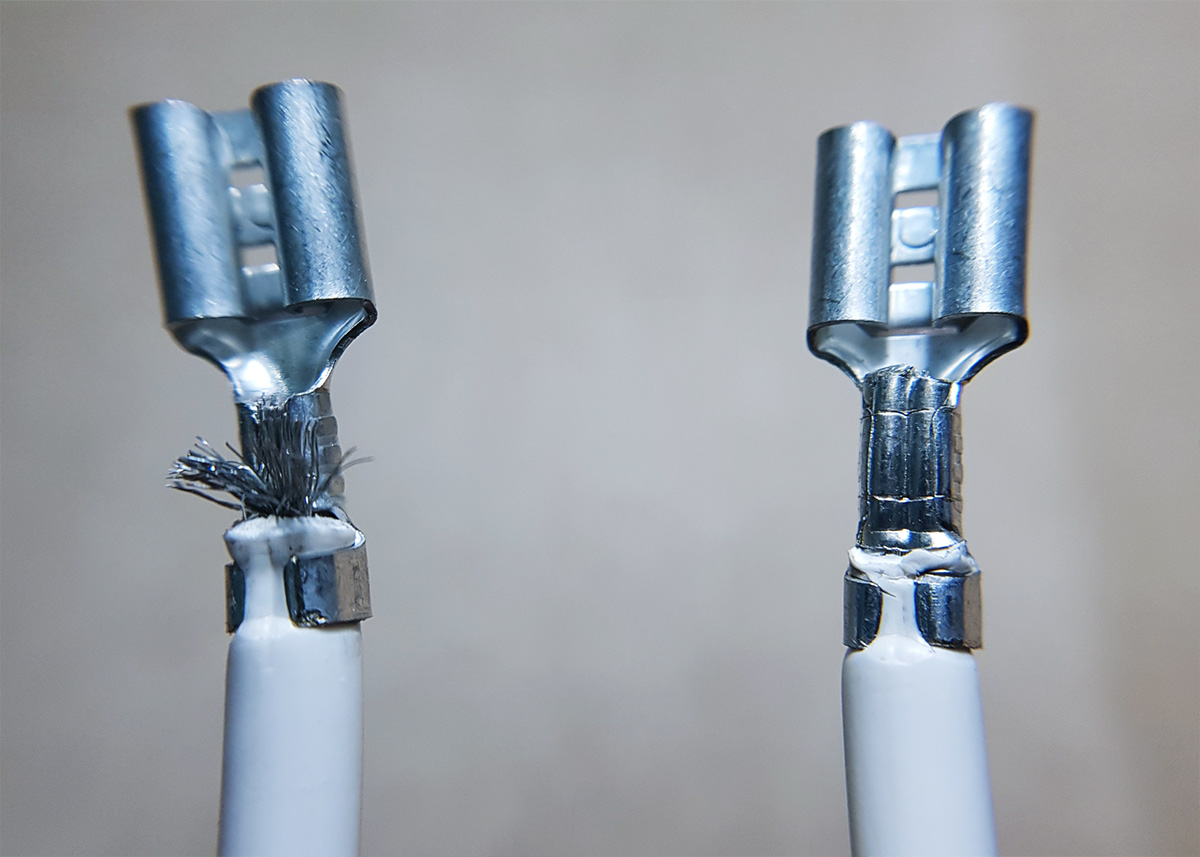
⚠️ Important Disclaimer: In this demonstration, I used a thicker wire to exaggerate the issue. In real-world applications, always use the correct specification of terminals and wires. This trick helps with containment, not with forcing oversized wires into undersized terminals!
Watch the Video
It’s a simple trick, but seeing it in action makes it easier to understand.
If this small tip helped you tame your messy wires, please consider subscribing for more tips!